Agricultural tracked vehicles work in environments where traction, ground pressure, durability, and operating stability all matter. This makes rubber track production more than a molding task. Manufacturers need to coordinate material preparation, forming, curing, handling, and quality control as one connected process.
As agricultural equipment becomes more specialized, factories are paying closer attention to production consistency and line integration. Rubber track solutions are therefore moving toward systems that connect several manufacturing stages rather than treating each machine as an isolated unit.
Why Agricultural Track Production Needs Integrated Equipment
Agricultural tracks are usually large components with demanding dimensional and structural requirements. Their production involves repeated heating, pressure control, material positioning, and demolding. If these steps are managed separately, process variation can increase and operators may need to make frequent manual adjustments.
Integrated equipment helps factories organize these stages into a more stable production sequence. Material movement, mold operation, curing, and unloading can be coordinated around the same process logic. This makes it easier to manage cycle timing and reduce unnecessary handling between steps.
For B2B manufacturers, this type of integration also supports clearer production planning. Output targets, labor allocation, maintenance schedules, and quality checks can be arranged around the complete line rather than around single machines.
This is one reason rubber tracks solutions are becoming more closely connected with automation and process monitoring. The goal is not simply faster production. It is to create a line where each stage supports the next stage with fewer interruptions.
Automation Changes the Role of Operators
High automation can reduce repeated manual movement during track production. Automated handling can support material transfer, loading, unloading, and product movement between process stages. This is especially useful when track components are heavy or when production cycles are repeated for long periods.
Automated demolding also changes how operators interact with the line. Instead of relying heavily on manual removal, the system can handle more of the demolding sequence in a controlled way. This can make cycle organization more consistent and reduce dependence on operator strength or timing.
Smart monitoring adds another layer of control. Production teams can follow machine status, process stages, and operating conditions from a more organized interface. When an abnormal condition appears, operators can respond based on visible process information rather than waiting for a later quality check.
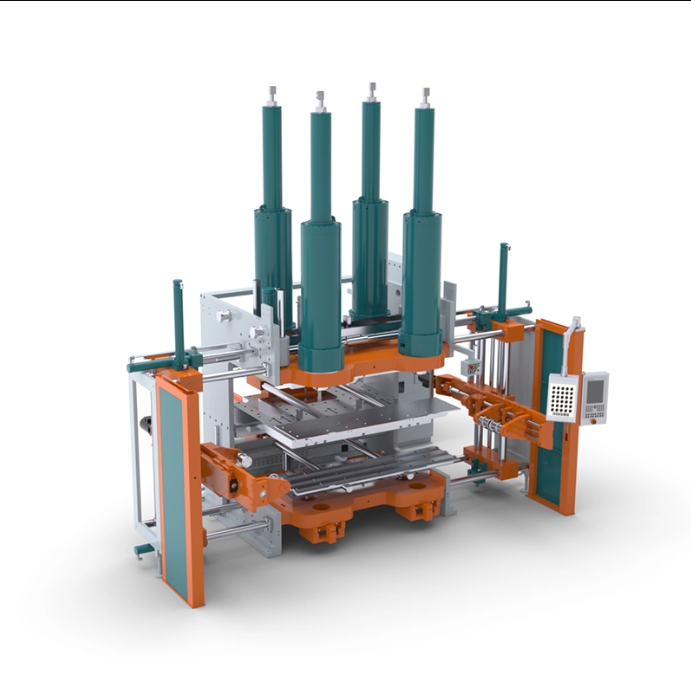
Dekuma applies this integrated approach in its Rubber Track Production Line. The system is designed for agricultural, construction, military, and snowmobile tracks, with automated handling, demolding, and process control combined within the production line.
Process Control Matters During Curing
Curing is one of the central stages in rubber track manufacturing because temperature, pressure, and timing directly affect the finished structure. Poor coordination during this stage can create variation between batches and make downstream inspection more difficult.
This kind of function is important for rubber track solutions used in agricultural applications. Track products may differ in size, pattern, reinforcement structure, and operating requirement. Production equipment therefore needs process settings that can be adjusted according to the track design being manufactured.
Stable process control also helps technical teams compare results between production runs. When heating, pressure, cycle time, and handling steps are managed in a more structured way, it becomes easier to identify where variation starts and which part of the process needs adjustment.
Continuous Iteration Supports Different Track Applications
Agricultural tracks are not identical to construction or military tracks. Vehicle weight, soil conditions, travel speed, operating duration, and tread design can create different production requirements. Equipment therefore needs enough flexibility to support different specifications without turning every change into a major line redesign.
Continuous iteration allows manufacturers to refine both equipment functions and process settings as application demands change. This can involve adjustments to automation logic, monitoring methods, curing control, or handling sequences. The value comes from making the production system easier to adapt over time.
At Dekuma, they position the Rubber Track Production Line for several track categories rather than one narrow application. This gives manufacturers a production platform that can be considered for agriculture tracks, construction tracks, military tracks, and snowmobile tracks according to project requirements.
For companies comparing rubber tracks solutions, this broader application range is useful when future product planning is still developing. A factory may begin with agricultural tracks but later need to evaluate other vehicle categories, different track dimensions, or revised process requirements. In this context, rubber tracks solutions should be assessed by process fit rather than equipment count alone.
What the Future of Agricultural Track Manufacturing Looks Like
The future direction of agricultural track manufacturing is likely to be more integrated, monitored, and process-driven. Factories will still need reliable molding and curing equipment, but the production value will increasingly come from how well handling, demolding, control, and production data work together. This direction gives rubber track solutions a clearer role in future agricultural track production.

