
What Role Do Integrated Writing Tablets Play in Lecture Hall Chairs Within Lecture Hall Seating Setups?

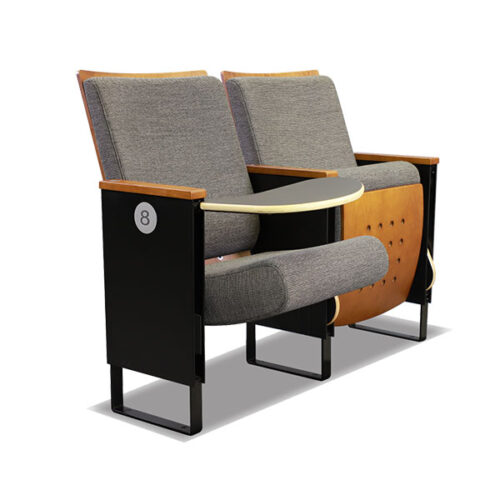
Integrated writing tablets turn lecture hall chairs into individual workstations. In dense classrooms, students may need a stable surface for notebooks, laptops, tablets, examination papers, or printed handouts. For campus venues and government training centers, healthcare education rooms, and commercial academies, lecture hall seating must support real study habits rather than only seat count. In modern education environments, lecture hall seats can include built-in workspaces such as foldable writing surfaces and device-ready armrests. That makes lecture hall chairs with tablets a practical tool for both traditional and digital learning. A poorly positioned tablet can interrupt note-taking, limit laptop use, or make students twist their bodies unnecessarily.
Writing Tablets as Daily Work Tools
Tablet position determines whether the feature helps or distracts. The surface should open smoothly, sit at a reachable height, and remain stable when students write or type. If it is too small, too far forward, or difficult to fold away, it may slow movement and create frustration. Leadcom Seating connects education seating with focus and learning outcomes, which is relevant because writing comfort affects attention. The education furniture partner should also check whether the tablet works for left-handed users, larger devices, and quick row exit. Students should be able to open and close the tablet without noise or awkward movement, especially in examinations or lectures where concentration matters.
Ergonomic Use in Dense Classrooms
Durability is important because tablets are touched constantly. Hinges, edges, laminate surfaces, and support brackets must tolerate repeated use across semesters. Education products and dynamic workspace options, including flip-top training tables, show that writing support can be delivered in different ways. For lecture hall chairs, the buyer should compare tablet chairs with separate tables, foldable work surfaces, and more flexible room layouts. International agents can support clients in deciding which format fits local teaching styles and maintenance capacity.
How Tablets Support Teaching Modes
The best integrated tablet does not simply add a surface; it improves how the lecture hall functions. Public owners and campus buyers should request samples, check writing posture, and consider cleaning access before approval. Leadcom Seating’s education information gives lecture hall seating planning a useful frame by linking comfort, adaptability, and device use. Well-selected lecture hall chairs support note-taking, testing, and digital work while keeping the row orderly and safe. This turns a small component into a meaningful part of the learning environment. Good lecture hall seating makes lecture hall chairs with tablets feel stable, reachable, and useful across both digital and handwritten learning tasks.

