Do you ever start to wonder whether your child’s growth is in line with the standard? Understanding the typical growth and development milestones for children can help you feel more confident and aware. It also allows you to support your child in the right ways, celebrate their progress, and respond to their needs with care and understanding.
The early childhood development milestones, such as abilities in the physical, social, emotional, or linguistic domains, can greatly aid in identifying the child’s advancement. While acknowledging that each child develops at a different pace, this blog will help you recognize the typical developmental milestones of various age groups.
Understanding Early Childhood Development Milestones
Milestones From Birth to 6 Months
Your child begins to adjust to their new surroundings from the very beginning. For example, during tummy time, the baby may lift their head, and as they grow, they may try to grab nearby toys. Smiling, maintaining eye contact, and responding to well-known voices gradually become more frequent. Soon, cooing and gentle babbling may begin to start.
These are all early developments that show how the baby’s awareness, motor coordination, and responsiveness have developed during this early growth stage.
Milestones From 6 to 12 Months
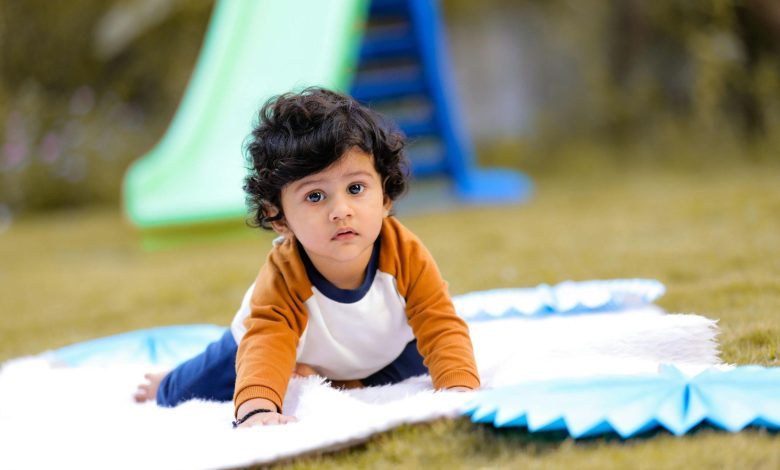
The child becomes more active, curious, and explores more during this period. You might see them sitting by themselves, rolling, crawling, or standing with the help of a support. The baby also develops motor skills and can now transfer objects from one hand to the other.
The baby may also start babbling more loudly and with greater variety, often repeating the same sounds multiple times. Waving or responding to names are examples of social behaviors that may emerge gradually as the child’s curiosity and recognition grow.
Milestones From 12 to 18 Months
This phase of development is characterized by the child exhibiting significant changes in movement patterns and communication. Some children may start walking or try to get up on the low furniture.
Your little one might combine signs with a few clearer words. The very basic forms of gaming activities might also come into view, for example, feeding a doll. All of these signs show that the child is improving in terms of comprehension, physical coordination, and even problem-solving abilities related to early childhood development milestones.
Milestones From 18 to 36 Months
Toddlers experience a phase of extremely rapid development in a number of areas. Your child may attempt basic activities, such as running, kicking a ball, or performing basic personal hygiene tasks. Their vocabulary typically expands to include short sentences, making it easier to communicate with the child.
They may also exhibit social behaviors like playing or trying to converse with other kids. The amount of progress varies from child to child, and each toddler may reach milestones at their own time.
Physical Growth and Motor Skill Development
Physical milestones include both gross and fine motor skills. Gross motor skills involve whole-body movements like walking, running, and jumping. Fine motor skills involve smaller movements that require hand-eye coordination, such as writing, drawing, or picking up small objects.
You may notice that the child starts handling things better, that is, their grip improves. It must be noted that children may develop these skills better if given an opportunity for safe movement and guidance. This allows them to comfortably explore their surroundings and develop their confidence and coordination.
Language, Social, and Emotional Development
At this point, physical development is accompanied by the development of emotional and communication skills. Your child will likely comprehend basic instructions before being able to speak clearly. As their consciousness grows, their emotions, such as annoyance or joy, are likely to become more noticeable.
One of your child’s earliest social skills may be sharing their preferences or paying attention to instructions more closely.
Conclusion
Recognizing early childhood development milestones can turn your child’s growth into a clearer and more patient experience. Skills develop gradually at each stage. Even though the timing may vary, the consistent progress in mobility, communication, and social skills can be reassuring.
By paying attention to their growth and being responsive, you not only create but also nurture their learning and growing process. When in doubt, consulting a specialist about your observations may provide the guidance, reassurance, and practical strategies to help your child reach their full potential.